
Yoga for ADHD: Focus, Regulation, and Routine
If you have ADHD, you know how challenging it can be to find your center when your mind feels like a browser with 47 tabs open. While traditional treatments focus on managing symptoms, yoga offers something different: a holistic approach that works with your nervous system to create calm from within. This isn’t about sitting still for an hour—it’s about building a sustainable practice that actually works with your ADHD brain.
Why Yoga Works for ADHD Brains
The relationship between yoga and ADHD isn’t just feel-good theory—it’s grounded in neuroscience. People with ADHD often have differences in their nervous system regulation and something called interoception, which is your ability to sense what’s happening inside your body.
When your nervous system is dysregulated, it can feel like you’re constantly in fight-or-flight mode. Your brain struggles to filter out distractions, focus becomes nearly impossible, and emotional reactions can feel overwhelming. Pranayama (breathwork) and gentle movement help activate your parasympathetic nervous system—the rest-and-digest response that promotes calm focus.
Interoception is equally important but often overlooked. Many people with ADHD have difficulty recognizing physical sensations like hunger, fatigue, or tension. This disconnect can make it harder to self-regulate emotions and behavior. Yoga bridges this gap by teaching you to notice and respond to your body’s signals.
The Science Behind Movement and Focus
Research shows that physical movement increases levels of dopamine, norepinephrine, and BDNF (brain-derived neurotrophic factor)—all crucial for attention and executive function. Unlike high-intensity exercise that might overwhelm a sensitive nervous system, mindfulness-based movement like yoga provides just enough stimulation to boost focus without triggering hyperarousal.
The combination of breath awareness, gentle movement, and present-moment focus in yoga creates what researchers call “embodied attention”—a state where your mind and body work together rather than against each other.
Your 15-Minute ADHD-Friendly Yoga Routine
This routine is designed with ADHD brains in mind: it’s short enough to maintain attention, structured enough to reduce decision fatigue, and flexible enough to adapt on difficult days. Think of it as a scaffold that supports you while building new neural pathways.
Setup (1 minute)
Find a quiet space and gather any props you might need—a yoga mat, pillow, or blanket. If you’re having a high-energy day, dim the lights or play soft instrumental music. On low-energy days, brighter lighting might help you stay alert.
Breath Awareness (3 minutes)
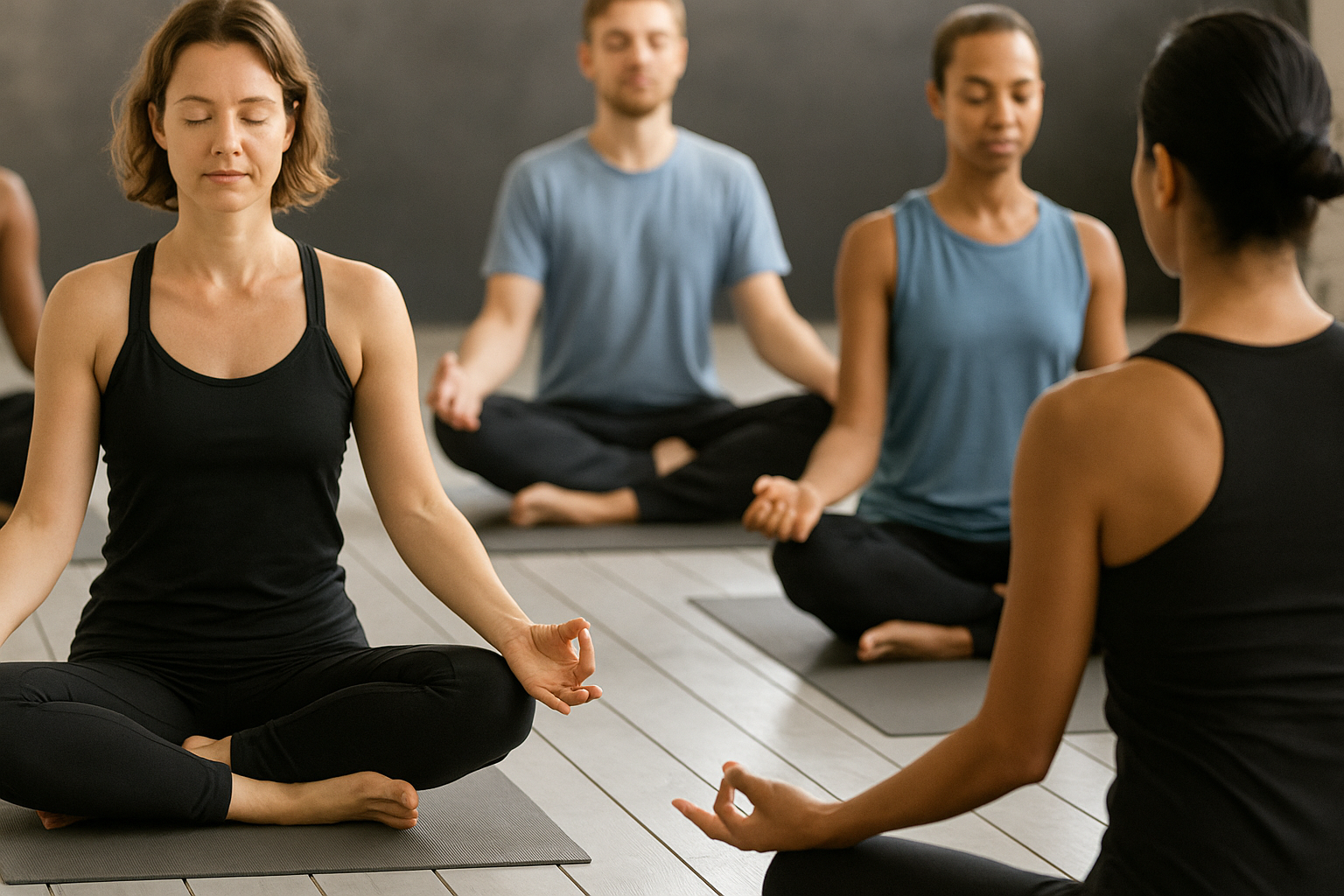
Begin in a comfortable seated position or lying down. Close your eyes or soften your gaze downward. Start with your natural breath, simply noticing the sensation of air moving in and out. After a minute, begin to deepen your breath slightly, counting to 4 on the inhale and 6 on the exhale. This activates your vagus nerve and signals safety to your nervous system.
Gentle Spinal Waves (2 minutes)
From seated, place your hands on your knees and begin small, slow circles with your torso. This isn’t about perfect form—it’s about awakening your spine and creating a connection between breath and movement. Reverse direction after one minute.
Cat-Cow Stretches (2 minutes)
Move to hands and knees. As you inhale, drop your belly and lift your chest (cow pose). As you exhale, round your spine toward the ceiling (cat pose). Let this be fluid and breath-led rather than rushed. This asana practice helps regulate your autonomic nervous system.
Child’s Pose with Side Reach (2 minutes)
Sit back on your heels and fold forward into child’s pose. After 30 seconds, walk your hands to the right for a gentle side stretch. Return to center, then stretch to the left. This pose activates your parasympathetic nervous system and provides a sense of safety and grounding.
Supported Bridge Pose (2 minutes)
Lie on your back with knees bent. Lift your hips into bridge pose, then place a pillow or block under your sacrum for support. This gentle backbend counters the forward posture we often hold when feeling overwhelmed while still feeling safe and supported.
Legs Up the Wall (2 minutes)
Lie with your legs up against a wall or extended toward the ceiling. This restorative yoga pose helps reset your nervous system and can reduce hyperactivity while improving focus.
Final Rest (1 minute)
End in a comfortable lying position. Set a gentle timer if you’re worried about time. Focus on the weight of your body against the floor and the rhythm of your natural breath.
Building Consistency: Habit Anchoring for ADHD
The biggest challenge isn’t learning the poses—it’s remembering to do them consistently. Traditional habit advice often falls flat for ADHD brains, so try these neurodivergent-friendly strategies instead.
Anchor to Existing Routines
Instead of trying to create a completely new habit, attach your yoga practice to something you already do reliably. This might be right after your morning coffee, before your evening shower, or immediately after your work day ends. The key is choosing an anchor that happens naturally, not one you think should work.
Make It Ridiculously Easy
On days when 15 minutes feels impossible, commit to just one minute of breath awareness. Success builds momentum, and perfectionist all-or-nothing thinking kills consistency. Some yoga is always better than no yoga.
Use Environmental Cues
Leave your yoga mat rolled out in a visible spot. Set out comfortable clothes the night before. Create visual reminders that reduce the friction between intention and action. Your environment should support your practice, not require extra decision-making.
Track Simply
Use a simple tracking method—a calendar with checkmarks, a habit app, or even just a jar with marbles. Focus on consistency over perfection. Missing one day doesn’t erase your progress.
Navigating Safety and Common Roadblocks
Yoga should feel accessible and safe, especially when you’re managing ADHD. Here are the most common challenges and how to address them.
When Your Mind Won’t Quiet
If traditional meditation feels impossible, try movement-based mindfulness instead. Focus on physical sensations—the feeling of your feet on the ground, the stretch in your muscles, or the rhythm of your breath. Your mind will still wander, and that’s completely normal.
Sensory Sensitivities
Many people with ADHD also have sensory processing differences. Adjust your environment as needed: try different textures for your mat, experiment with lighting levels, or use noise-canceling headphones. Your practice should feel comfortable, not overwhelming.
Time Blindness
Set gentle timers for each section of your practice. This removes the anxiety of wondering how much time has passed and helps you stay present. Choose a soft chime or bell rather than a jarring alarm.
Hyperactivity and Restlessness
If you’re feeling particularly hyperactive, start with more dynamic movements before settling into gentler poses. You might need to shake out your arms and legs, do some gentle jumping, or try a few vinyasa flows before slowing down.
Tracking Progress Without Perfectionism
Progress with ADHD and yoga isn’t linear, and traditional metrics often miss what matters most. Here’s how to measure success in ways that actually serve you.
Notice Subtle Changes
Instead of expecting dramatic transformations, pay attention to small shifts: Do you feel slightly calmer after practice? Are you sleeping a bit better? Can you catch yourself before a meltdown more often? These micro-improvements are real progress.
Track Your Nervous System
Keep a simple log of your energy and mood before and after practice. Use a 1-10 scale for anxiety, focus, and physical tension. Over time, you’ll see patterns and understand how yoga affects your particular nervous system.
Celebrate Consistency Over Perfection
Practicing yoga three times a week imperfectly is infinitely more valuable than practicing perfectly once a month. Celebrate showing up, even when your mind was wandering or you modified every pose.
Adjust Expectations
Some days your practice will feel focused and restorative. Other days, just lying on your mat for five minutes might be exactly what your nervous system needs. Both are valid and valuable.
Remember that developing a yogi lifestyle isn’t about becoming a different person—it’s about giving your ADHD brain the tools it needs to thrive. This practice isn’t meant to “fix” your neurodivergence but to support you in managing it with greater ease and self-compassion.
If you’re interested in deepening your understanding of how yoga can support neurodivergent brains, consider exploring yoga teacher training programs that include trauma-informed and accessible yoga approaches. The more we understand about our nervous systems, the better we can care for ourselves and others.
What has your experience been with yoga and ADHD? Have you found certain practices or times of day that work particularly well for your nervous system?