 Making Yoga Work for Neurodiverse Minds
Yoga has long been celebrated as a powerful tool for physical health, mental well-being, and inner peace. However, traditional yoga classes often fail to accommodate neurodiverse individuals—those with ADHD, autism spectrum disorder (ASD), sensory processing differences, and other cognitive variations. Many yoga studios operate with rigid class structures, fast-paced transitions, and verbal-heavy instructions that can be overwhelming for neurodivergent participants.
The good news? Inclusive yoga is on the rise. As the world becomes more aware of neurodiversity, yoga is evolving to become more accessible, adaptable, and welcoming to people with different neurological needs. In 2025, more yoga teachers, studios, and online platforms are recognizing the importance of neurodivergent-friendly yoga.
This blog explores:
✅ What inclusive yoga is and why it matters in 2025.
✅ The benefits of yoga for ADHD, autism, and other neurodivergent conditions.
✅ How to create a safe, accessible yoga space for neurodiverse minds.
✅ The best platforms and resources for neurodivergent-friendly yoga.
✅ FAQs about inclusive yoga for ADHD, autism, and sensory processing differences.
Whether you’re neurodivergent yourself, a parent of a neurodiverse child, or a yoga teacher looking to create a more inclusive space, this guide will provide you with the insights and resources you need.
What Is Inclusive Yoga and Why Does It Matter?
Understanding Inclusive Yoga
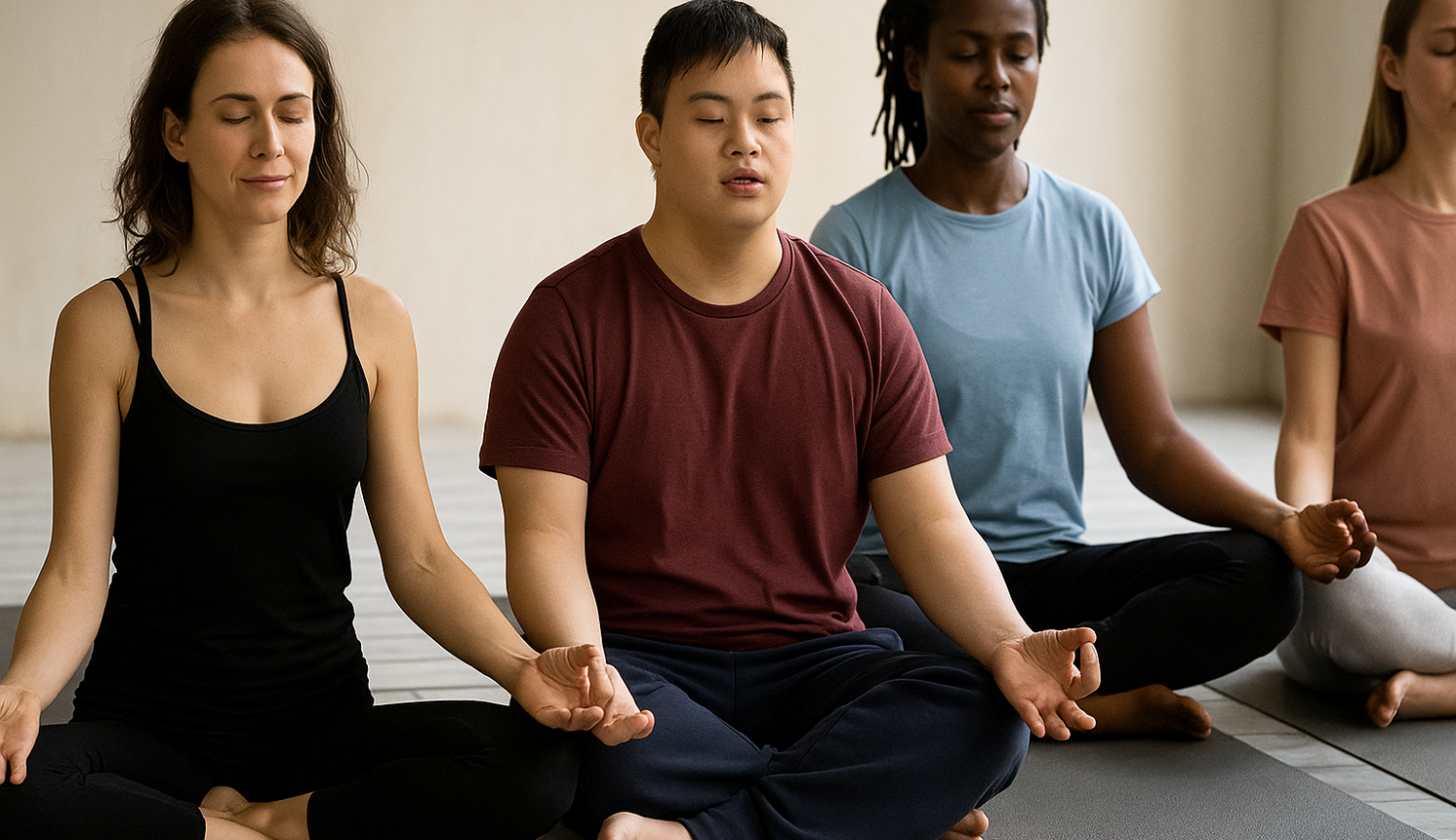
Inclusive yoga is a practice that adapts traditional yoga to be more accessible and welcoming for individuals with different cognitive and sensory processing styles. It emphasizes:
- Flexible class structures that allow for self-paced movement.
- Clear, simple instructions that reduce confusion or sensory overload.
- Adaptive poses to accommodate different comfort levels.
- Mindfulness techniques tailored for neurodivergent minds.
For people with ADHD, ASD, dyspraxia, and sensory sensitivities, traditional yoga classes can feel overwhelming. Too many verbal cues, rigid rules, and fast transitions can make it difficult to engage. Inclusive yoga removes these barriers by offering modifications that allow neurodivergent participants to move at their own pace, in ways that feel natural to them.
Why Is Inclusive Yoga Growing in 2025?
The demand for neurodivergent-friendly wellness practices is increasing. Schools, workplaces, and community organizations are recognizing the benefits of yoga for mental health, emotional regulation, and self-awareness. Many neurodivergent individuals also seek holistic alternatives to improve focus, manage stress, and enhance well-being.
Additionally, the rise of remote yoga classes and digital wellness apps has made it easier than ever to customize yoga experiences for neurodiverse participants. In 2025, yoga is not just about physical postures—it’s about creating a safe, adaptable space where all minds and bodies can thrive.
The Benefits of Yoga for Neurodivergent Individuals
Neurodiverse individuals experience the world differently, often facing challenges with focus, emotional regulation, and sensory processing. Yoga offers science-backed benefits that help manage these challenges.
1. Yoga Improves Focus & Attention (Great for ADHD)
People with ADHD often struggle with impulsivity, distractions, and hyperactivity. Yoga helps by:
- Strengthening the mind-body connection through breath and movement.
- Encouraging slow, deliberate movements that require focus.
- Teaching grounding techniques to calm racing thoughts.
- Reducing impulsivity through mindfulness and controlled breathing.
Studies show that yoga increases dopamine levels, helping people with ADHD feel more focused and centered.
2. Yoga Supports Emotional Regulation (Helpful for Anxiety & Sensory Overload)
Many neurodivergent individuals experience heightened emotional responses, making it difficult to manage stress or frustration. Yoga helps by:
- Regulating the nervous system through breathwork.
- Providing sensory grounding to reduce overstimulation.
- Creating predictable routines that reduce anxiety.
- Encouraging self-awareness and self-soothing techniques.
Mindfulness-based yoga has been shown to lower cortisol levels (the stress hormone), promoting a sense of calm.
3. Yoga Enhances Body Awareness & Coordination (Great for Autism & Dyspraxia)
Neurodivergent individuals often experience challenges with motor coordination and proprioception (body awareness). Yoga helps by:
- Improving muscle control and balance through slow movements.
- Offering deep pressure and stretching to ease muscle tension.
- Teaching spatial awareness in a non-judgmental setting.
Gentle poses like Child’s Pose and Legs Up the Wall can be especially helpful for individuals who need grounding and deep relaxation.
4. Yoga Encourages Routine & Predictability
Neurodivergent-friendly yoga follows a predictable structure that creates a sense of safety and routine. This consistency helps individuals feel more comfortable, reducing anxiety and uncertainty.
How to Create a Neurodivergent-Friendly Yoga Practice
1. Modify the Environment for Comfort
- Use soft lighting and minimal distractions.
- Provide weighted blankets, textured mats, or yoga props for sensory comfort.
- Allow participants to choose their own spot in the room.
2. Use Clear & Simple Instructions
- Give short, direct verbal cues with visual demonstrations.
- Avoid fast-paced sequences that may feel overwhelming.
- Offer alternative movements for self-paced learning.
3. Provide Flexible Class Structures
- Allow breaks when needed without judgment.
- Let participants opt out of certain poses if uncomfortable.
- Offer self-paced options for those who need more time.
4. Incorporate Mindfulness & Breathwork
- Teach box breathing for focus and relaxation.
- Use body scans to enhance self-awareness.
- Offer guided relaxation at the end of class.
5. Foster a Judgment-Free Space
- Normalize fidgeting, stimming, and alternative movements.
- Focus on comfort and personal benefits, not achieving “perfect” poses.
- Encourage self-expression in movement.
Best Places to Find Neurodivergent-Friendly Yoga Classes
1. Online Yoga Platforms
- Spectrum Yoga – Yoga for ADHD & autism.
- Yoga for the Special Child – Great for sensory sensitivities.
- Insight Timer – Free guided mindfulness sessions.
2. In-Person Yoga Studios
- Adaptive Yoga Studios – Focused on accessible movement.
- Community Centers – Offer neurodivergent-friendly classes.
- Private Instructors – Provide 1-on-1 adapted sessions.
3. Social Media & Support Groups
- Facebook Groups: Neurodivergent Yoga Support
- Instagram Hashtags: #NeurodiverseYoga
- Meetup: Local neurodivergent-friendly yoga events.
Conclusion: Start Your Neurodivergent-Friendly Yoga Journey Today
Inclusive yoga is more than just a trend—it’s a movement toward accessibility and self-care for all minds and bodies. Whether you’re looking to improve focus, manage stress, or build self-awareness, neurodivergent-friendly yoga offers tools that can help.
Take the Next Step!
✅ Join Spectrum Yoga for ADHD & autism-friendly classes!
✅ Try a short home practice today.
✅ Find a supportive community that understands your needs.
💙 Ready to begin? Sign up for a neurodivergent-friendly class today! 💙